




Spreadsheet-based utility CIP planning fails at scale. Learn why asset condition data, failure history, and cost estimates need to be connected in one system.
For US Utilities serving 3,000-100,000 meters and for operations team, billing team and utility managers. For Heads of Billing who own collections accuracy and revenue leakage.
Utility capital improvement planning software is a platform that connects asset condition ratings, work order failure history, replacement cost estimates, and billing data in a single system so a utility can build a multi-year capital improvement plan backed by documented evidence rather than spreadsheet estimates. It replaces the manual reconciliation of data spread across GIS files, work order logs, and finance spreadsheets with a live, queryable register that updates automatically as field work is completed. The SMART360 asset management module provides the CIP data infrastructure for utilities in the 3,000 to 500,000 meter range, including condition tracking, failure history, GIS mapping, and exportable capital planning reports.
A utility capital improvement plan (CIP) is a multi-year schedule, typically covering five to ten years, that identifies, prioritizes, and funds the repair or replacement of aging infrastructure assets: water mains, meters, pumping stations, electrical distribution equipment, and gas distribution lines. A credible CIP links asset condition data to projected failure risk and replacement cost, giving a Utility Director a defensible basis for every capital dollar requested.
The EPA estimates the US needs $625 billion in drinking water infrastructure investment over the next 20 years to maintain safe service. For a small or mid-sized utility, that national picture lands locally as main breaks, pressure failures, compliance notices, and city council meetings.
The question is not whether your utility needs a CIP. It does. The question is whether the data you have today is good enough to build one you can defend. For a complete overview of how asset management software structures the data that feeds capital planning, what is utility asset management software covers the full asset lifecycle framework.
A capital improvement plan is only as credible as the data behind it. Utilities that present a CIP to their board or a federal grant program without reliable supporting data rarely get funded and face follow-up questions they cannot answer.
These are the five inputs every CIP requires:
For most small and mid-sized utilities, this data is spread across three to five separate systems: a GIS file for the pipe inventory, a work order log in a separate platform, billing data in a CIS, and cost estimates in a finance spreadsheet updated once a year. None of these systems talk to each other. For the specific condition data requirements that water distribution systems need to make this analysis work, asset management software for water utilities covers the data model in detail.
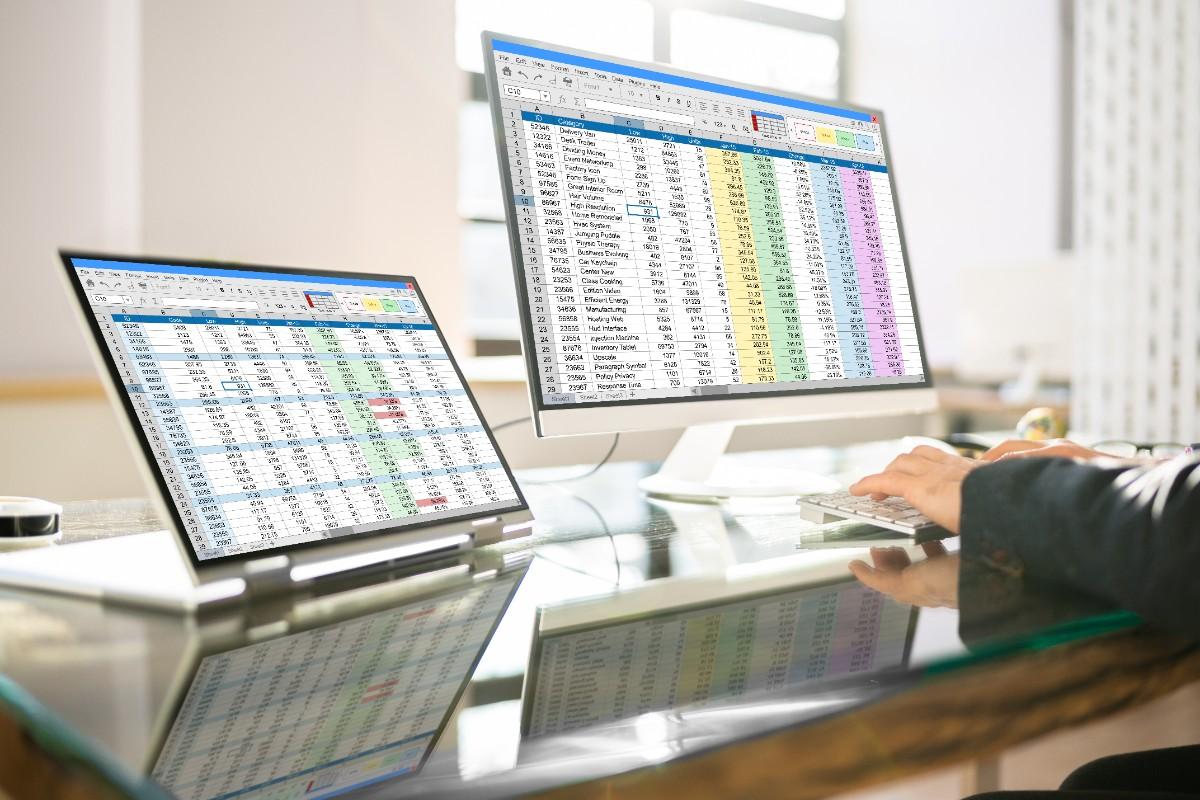
Spreadsheets are not the problem for a utility tracking 50 assets with one person responsible for capital planning. For any utility managing thousands of service connections, miles of distribution pipe, and hundreds of pumping and metering assets, spreadsheet-based CIP planning has four predictable failure modes.
Data goes stale immediately. When a main breaks and a crew repairs it, that event should update the asset's condition record, failure count, and maintenance cost history. In a spreadsheet, it almost never does because the work order system and the asset spreadsheet are separate, and manual updates get skipped under operational pressure. The result: the CIP is built on condition data that may be 12 to 24 months out of date.
Prioritization becomes subjective. Without a live condition score and failure history for each asset, ranking capital projects comes down to institutional memory and the judgment of whoever built the spreadsheet. When that person retires, the logic goes with them.
Federal funding applications require documented data trails. The EPA's Water Infrastructure Finance and Innovation Act (WIFIA) program, USDA Rural Utilities Service loan programs, and Infrastructure Investment and Jobs Act (IIJA) state revolving fund programs all require utilities to demonstrate documented asset condition assessments and replacement prioritization methodologies. A spreadsheet with no audit trail does not satisfy that requirement.
Board presentations lack the evidence to close. When a Utility Director presents a $4 million pipe replacement line item to the city council, the question that follows is: why this pipe, and why now? If the answer relies on memory rather than a documented condition score and failure history pulled from a live system, capital requests get deferred. For the framework utilities use to make individual repair vs. replace decisions from condition data, water utility asset repair vs. replace covers the full evaluation methodology.
Is your current capital improvement plan built from a live asset condition register, or from the last time someone had time to update the spreadsheet?
A unified utility platform connects asset management, work order management, and billing data in a single system. When a crew completes a repair on an aging cast iron main, the work order closes in the same system that holds the asset record. The asset's failure count increments. The maintenance cost updates. The condition score adjusts. No manual reconciliation. No spreadsheet update at the end of the quarter. The data is current because the workflows are connected.
SMART360's asset management module holds the complete infrastructure register: condition ratings, useful life tracking, GIS mapping, and capital improvement planning tools. The work order module feeds failure history directly into each asset record. Because billing and customer accounts are in the same system, a Director can see not just which assets are aging fastest but which service areas and revenue streams they serve, giving every capital request a financial context the board can evaluate.
The 25+ pre-built integrations covering AMI meter platforms and GIS systems connect to the metering and mapping infrastructure most utilities already operate, rather than replacing it.
Can you produce a documented, exportable condition report for every major asset in your network on demand, or only for the ones that have already failed?
A defensible capital improvement plan has four components a board or city council needs to see before approving capital dollars:
When a Utility Director walks into a city council meeting with a five-year CIP backed by condition scores, work order failure history, and a documented funding strategy, the conversation changes. Budget requests move from "we need to replace this pipe because it keeps breaking" to "our data shows 14 miles of cast iron main installed before 1955 with an average of 3.2 failures per mile over the past five years, and federal funding is available to offset 40 percent of replacement cost." One of those statements gets funded.
For the operational data on how utilities that move from reactive to proactive maintenance measure the change in outcomes, proactive vs. reactive maintenance for water utilities covers the before-and-after comparison in detail.
A utility capital improvement plan is a multi-year schedule that identifies, prioritizes, and funds the repair or replacement of aging infrastructure assets. A credible CIP is built from documented asset condition ratings, work order failure history, replacement cost estimates, and a defined funding strategy covering operating budget, reserves, and federal programs.
The five core inputs are: an asset inventory with condition ratings, work order and failure history by asset, useful life and remaining service life estimates, current replacement cost data by asset type, and billing and revenue data that shows the financial impact of at-risk infrastructure. Without all five connected in one system, CIP prioritization relies on judgment rather than documented evidence.
Utility asset management software centralizes the data inputs a CIP requires in a single system. When the work order module and asset management module are connected, failure history updates automatically with each repair completion, keeping condition data current without manual reconciliation across separate systems. This produces the audit-ready, exportable condition reports that federal funding applications require.
Yes. Capital improvement planning is not exclusive to large utilities. Small and mid-sized utilities serving 3,000 to 100,000 customers face the same federal funding requirements and board accountability as larger systems. Modern utility platforms built for this scale make structured CIP accessible without enterprise-level IT infrastructure or multi-year implementation timelines.
Several programs require documented asset condition assessments and capital plans as part of the application: EPA's Water Infrastructure Finance and Innovation Act (WIFIA), USDA Rural Utilities Service loan and grant programs, and IIJA state revolving fund programs. Utilities with a structured, data-backed CIP exportable from a live system are better positioned in competitive funding rounds than utilities submitting manually compiled spreadsheets.
Bynry Inc.
8 The Green STE.R,
Dover, Kent,
Delaware 19901
+1 732-630-0285
Bynry Inc.
Serene Tower, Pakharbaug
Pune, Maharashtra 411021
+91 93252-51217